
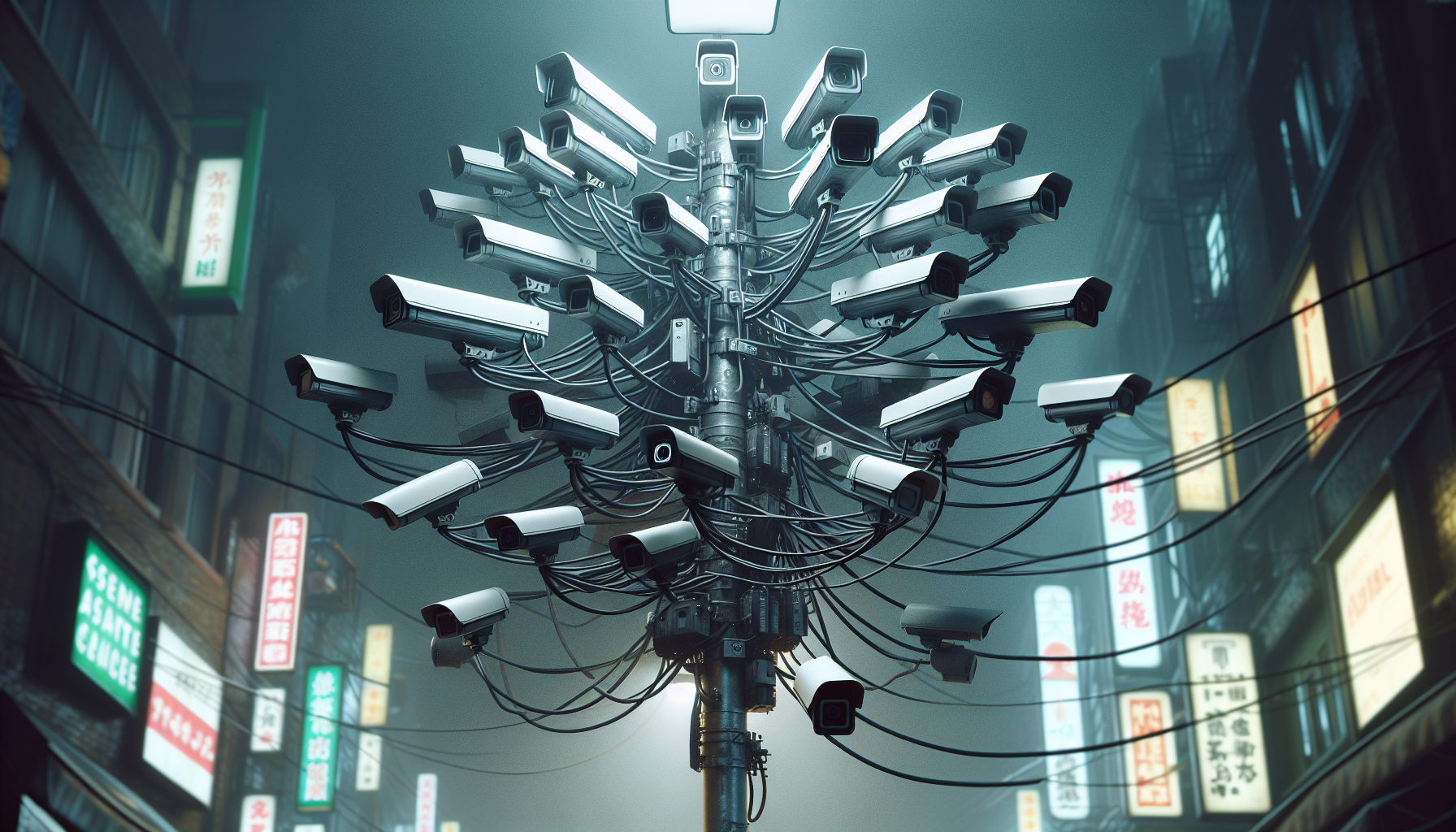
Metro City's Department of Public Safety announced Thursday the completion of its Enhanced Visual Monitoring Initiative, bringing the average number of surveillance cameras per city block to 47.
Mayor David Bradley held a press conference to celebrate the milestone, standing before a wall displaying a live feed from 2,847 cameras simultaneously.
"Today, Metro City becomes the safest city in America," Bradley declared. "With 47 cameras per block, there is nowhere for criminals to hide. Every angle is covered. Every moment is recorded. This is what security looks like."
By The Numbers
The $340 million initiative, funded through a combination of municipal bonds and a partnership with Nexus Corporation, added 15,000 new cameras to the city's existing surveillance infrastructure. Total camera count now exceeds 180,000 across Metro City's 3,827 blocks.
Key Statistics
- 47 cameras per block (average)
- 180,247 total surveillance devices
- 99.7% of public spaces under visual coverage
- 4.2 petabytes of footage generated daily
- 0.3% of footage reviewed by humans (remainder processed by AI)
The remaining 0.3% of unmonitored space consists primarily of designated "privacy zones" — small areas beneath certain trees and inside licensed establishments that have paid for camera exemptions.
Privacy Concerns
Privacy advocate group Metro Freedom Coalition issued a statement calling the expansion "the final nail in the coffin of public anonymity."
"At 47 cameras per block, a resident walking three blocks to their local eCoffee will be recorded from approximately 141 angles. We are not safer. We are just more watched."
— Jordan Ellis, Metro Freedom Coalition
The Department of Public Safety disputed this characterization.
"Being watched is being safe," responded Public Safety Director Charles Morton. "If you have nothing to hide, you have nothing to fear. These cameras are not watching law-abiding citizens — they are protecting them."
When asked how cameras protect citizens if they only record events after they occur, Morton explained that "the presence of cameras deters crime before it happens" and that questioning this logic "sounds like something a criminal might say."
Nexus Partnership
The camera network is operated in partnership with Nexus Corporation, which processes all footage through its proprietary Sentinel AI system. According to Nexus, Sentinel can identify "suspicious behavior patterns" before crimes occur.
"It's like having 180,000 police officers who never sleep, never get tired, and never let a single moment go unobserved," said Nexus VP of Public Sector Relations Victoria Huang. "And unlike human officers, our cameras don't have civil rights concerns about watching you."
Public Reaction
Metro City residents interviewed expressed mixed reactions.
"I feel safer knowing every moment of my life is being recorded," said accountant Patricia Williams, 42. "If something happens to me, at least they'll have 47 angles of footage."
"I used to pick my nose in public," admitted retail worker Marcus Thompson, 27. "Can't do that anymore. So I guess that's... good?"
The Department of Public Safety plans to reach 60 cameras per block by 2047.